
Ten steps across three tools became one.
Vehicle testing was scheduled by hand in Slack and spreadsheets. I designed the platform that replaced it: request submission through resource allocation, end to end.
Every incomplete request cost a vehicle a day.
Requesters filed test requests. Schedulers (PMO, PST, and AO roles) turned them into vehicle time. Between those two facts sat Slack threads, three spreadsheets, and a weekly meeting doing the arbitration by memory.
The failure mode was consistent: a request arrived missing something, bounced, and came back days later. A bounced request meant an idle vehicle, and idle vehicles are the single most expensive thing in an AV testing programme.
Seven interviews, and weeks in the meeting nobody wanted to attend.
Five requesters, two schedulers, then I sat in the weekly scheduling meeting until I could predict what would go wrong. I audited the Slack channels and spreadsheets the team was bridging by hand, and mapped current state against a proposed flow.
The finding that reframed the project: the problem wasn't the tool, it was the input. No amount of interface would fix a request that arrived incomplete. The design had to move upstream.
No standardisation
Every requester had their own format. Schedulers reverse-engineered intent from prose.
Prioritisation lived in memory
Ordering was real and defensible, and existed nowhere a requester could see it.
Duplicated entry across three tools
The same facts typed three times, diverging quietly each time.
Reschedules were the norm
Not the exception. The workflow had absorbed its own failure rate as routine.
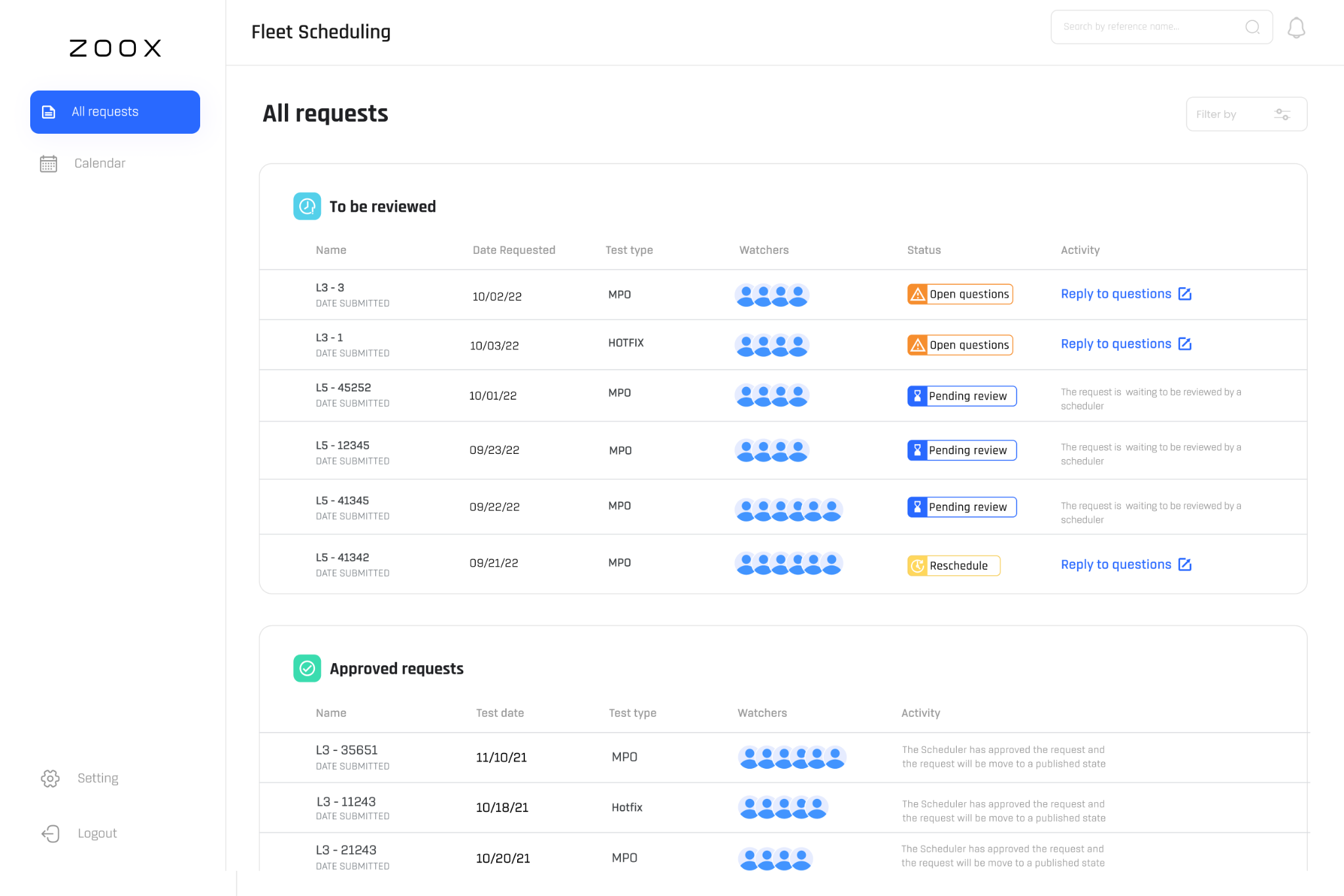
I made the form strict. Requesters hated it.
Request types now carry different required fields, and you can't submit an incomplete one. Two minutes of work moved onto the requester so it doesn't become two days for the scheduler. That trade is obvious in aggregate and deeply unpopular individually.
The argument that won the room wasn't a mockup. It was showing requesters their own bounce rate. The flexibility they were defending was the thing generating their rework. Once that was on a screen, the conversation was over.
Alongside it: prioritisation made visible rather than automated, conversation and history centralised in the same surface as the request, and progressive disclosure so the form stays scannable until complexity is genuinely required.
A free-text request boxFaster to build and popular with requesters. It would have rebuilt the spreadsheet inside a nicer container. Unstructured input was the entire problem.
An approvals queue with rejection reasonsTreats the bounce as inevitable and just makes it politer. Better to make the incomplete request impossible to file.
Automated priority scoringTempting, and wrong for that moment. The team didn't yet trust the tool with the data scoring would need. Prioritisation stayed human, with its inputs made visible. Automate it later, once the trust exists.
Utilisation up. Manual scheduling time down.
Vehicle utilisation rose against the pre-launch baseline, and manual scheduling time per request fell across all three scheduler roles. Both came from the same source: requests that arrive complete don't bounce, and vehicles that don't wait on a bounce get used.
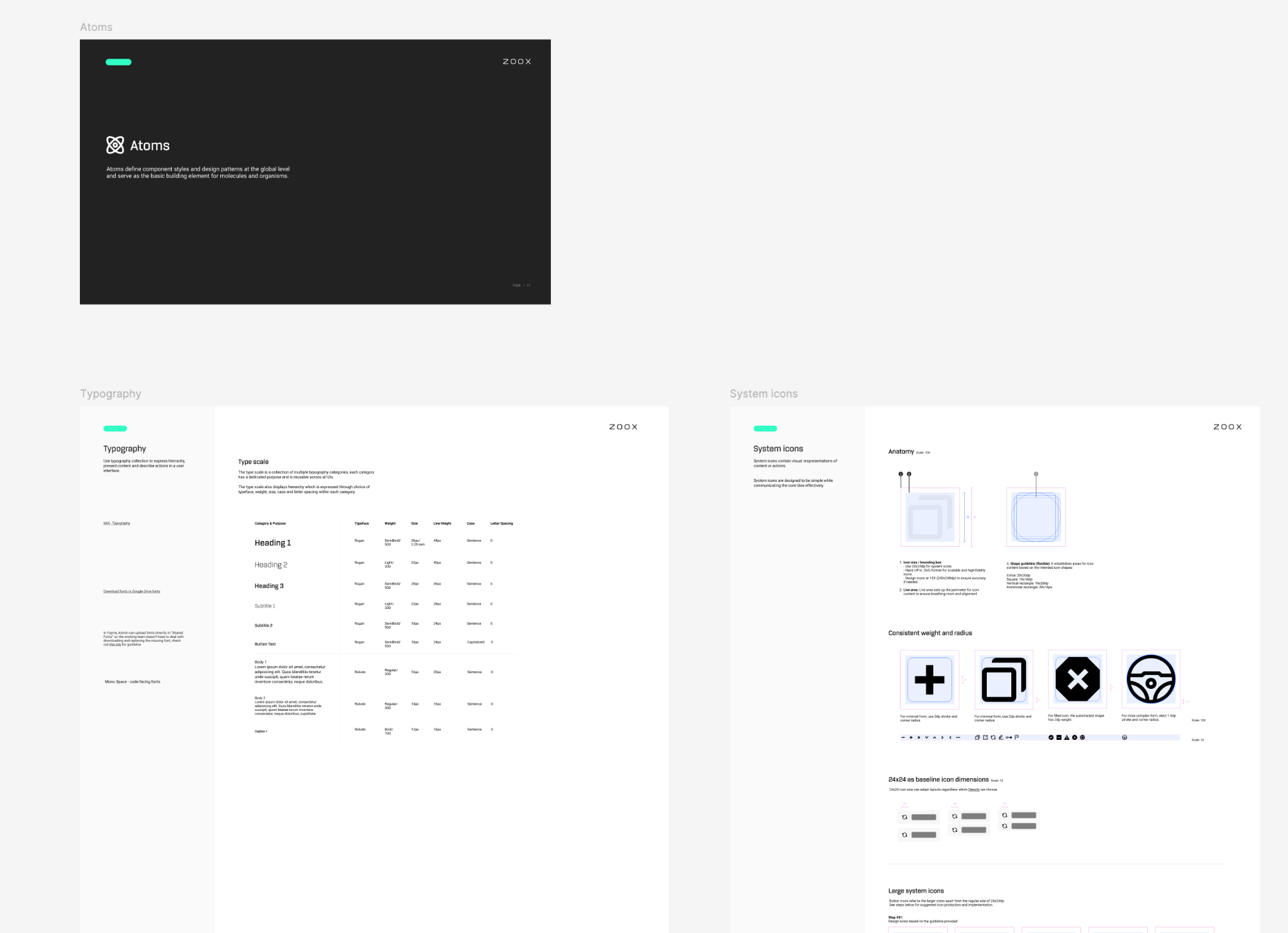
The dispatch and queuing approach became a US patent. The project also seeded a broader evolution of Zoox's internal design system. I led that strategy and wrote the atoms, typography, and system-icon documentation the rest of the company built on.
Got a surface like this one that isn't working?
Start a project